ServicesReverse Osmosis
Reverse Osmosis in Oxnard
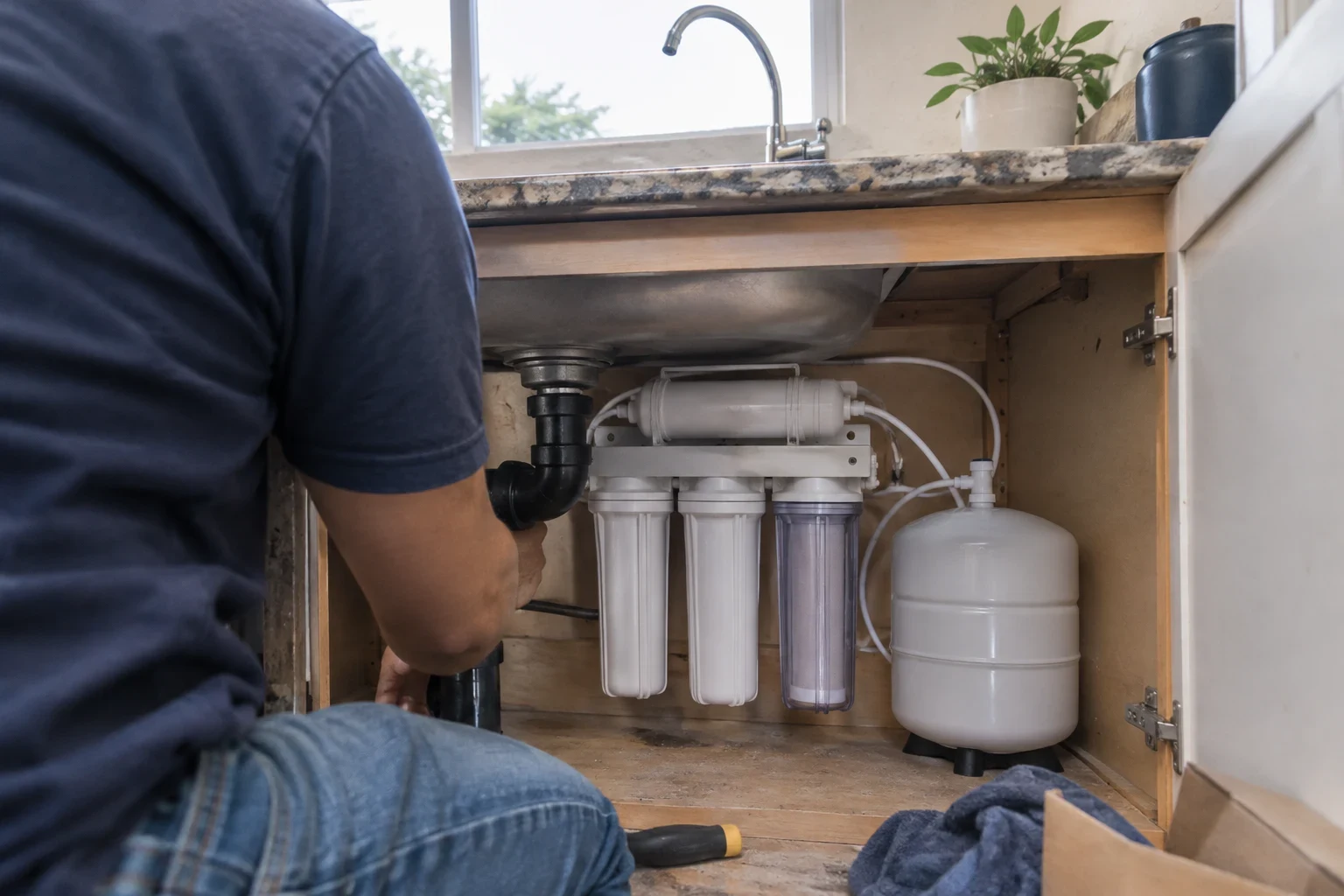
Get clean, good-tasting water straight from a faucet at your kitchen sink. We install under-sink reverse osmosis systems and walk you through each part first: the membrane, the filters, the tank and the faucet. That way you know exactly what you're getting and why.
How Reverse Osmosis Works in Your Home
Tap water is pressed against an extremely fine membrane. Dissolved minerals, lead and many other dissolved contaminants stay behind, and only the cleaned water moves on to a small faucet beside your sink. What the membrane rejects is rinsed down the drain.
An RO unit feeds a single tap, the one you use for drinking glasses and cooking pots, not the whole house. It suits you if you're done carrying home bottled water, if coffee or ice tastes strange, or if you want to feel surer about what your family drinks.
Few methods pull dissolved minerals out of drinking water the way RO does, which also helps when your kettle keeps building up scale. For filtered water at every faucet and shower, see our Whole Home Water Filtration page.
The Parts We Install and Why They Matter
Sediment prefilter
The first stage is a spun polypropylene cartridge that traps sand, grit and bits of rust before they go any further. It shields the more expensive parts after it and costs the least to swap out.
Carbon block prefilter
Chlorine slowly breaks down an RO membrane, so this stage takes it out first. We prefer a solid carbon block to loose granular carbon, since water can't find a shortcut through a block and gets filtered more evenly.
Thin-film composite membrane
The membrane does the real work. Thin-film composite types hold back more dissolved solids than older cellulose triacetate membranes, and they last well on chlorinated city water as long as the carbon stage protects them.
Storage tank or tankless unit
A classic steel tank with a rubber bladder inside keeps a few gallons on hand. Tankless units take up less room and produce water as you need it, though they need power nearby. We'll check your cabinet and recommend the one that fits.
Polishing and remineralization
A last carbon stage removes any taste picked up in the tank. If plain RO water seems flat to you, an optional mineral cartridge returns a touch of calcium and magnesium.
Dedicated faucet
You can choose brushed nickel, chrome or matte black, so the small faucet looks at home beside your main one.
Signs Reverse Osmosis Is Right for You
You buy cases of bottled water
If plastic bottles pile up in your recycling every week, an RO faucet gives you that water straight from the sink instead.
White crust on kettles and glasses
Chalky film and scale mean there are plenty of dissolved minerals in your water. An RO system takes out most of them before the water reaches your glass.
Coffee, tea or ice tastes off
Chlorine and minerals affect the flavor of anything you make with tap water. Cloudy ice cubes are another hint.
Concerns about older plumbing
In older homes, aging pipes or solder can add metals such as lead by the time water reaches the tap. RO filters right at the point where you fill your glass, which makes it a solid final barrier.
You want baby formula or pet water you feel good about
Lots of families choose RO just to feel more confident when they mix formula or refill the dog's bowl.
What Happens on Install Day
- 1
It begins on the phone
Let us know what you dislike about your tap water and about how much your household uses for drinking and cooking. We go over the material options with you and settle on a system that suits you.
- 2
Checking the sink cabinet
When we arrive, we look at the cabinet space, the cold water shutoff, the drain line and whether the sink has an open hole or room for one. If you'd like filtered water at the fridge or ice maker, we map that line as well.
- 3
The installation
We turn off the cold water, fit a feed valve and a drain clamp, and mount the housings and tank. On quartz or granite we drill slowly with a stone bit. The job usually takes a few hours.
- 4
Flushing, leak checks and a quick lesson
Fresh filters and a new membrane have to be flushed before you drink from them, so we run water through and inspect each connection for leaks. Then we show you how and when to change the filters.
What Sets the Price of an RO System
We cover the install cost, so your total depends mostly on the system and parts you choose. On the call we go through each option and what it adds, and you know the number before anything is ordered.
- How many stages
- A standard four-stage unit costs the least. Adding a polishing stage or mineral cartridge raises the price slightly and gives you one more filter to change later.
- With a tank or without
- Tankless units cost more at the start and need an outlet in the cabinet. A tank model is simpler, has fewer wearing parts and costs less.
- Extras
- A permeate pump reduces how much water goes down the drain. A line to your fridge or ice maker needs more tubing and fittings.
- Faucet finish
- Plain chrome is the budget choice. Designer finishes and air-gap faucets cost a bit more.
- Filter changes down the road
- Prefilters usually need replacing every six to twelve months. The membrane lasts several years, depending on your tap water and how much your household drinks and cooks with.
Common Questions About Reverse Osmosis
Something not covered here? (805) 628-4693
Does an RO system send a lot of water down the drain?
Some water does go to the drain, because that rinse keeps the membrane from clogging. Today's membranes, particularly with a permeate pump, use far less than older ones. The rinse only happens while the tank fills and stops when it's full.
Does RO water taste flat?
With the minerals gone, lots of people call RO water light and crisp. If you like more body, a remineralization cartridge puts back a little calcium and magnesium. We can add it on install day or any time after.
Can my refrigerator use the RO water?
In most kitchens, yes. We run tubing from the unit to the fridge dispenser and ice maker so both get the same filtered water. How we route it depends on the distance from the sink to the fridge.
Is a tank or tankless system better for me?
A tank holds a few gallons ready to pour and uses no power. Tankless frees up cabinet room and filters on demand, but needs an outlet close by. When a garbage disposal fills most of the cabinet, tankless is often the easier fit.
How long do the filters last?
Sediment and carbon prefilters typically last six to twelve months. A membrane usually runs a few years before it needs replacing. Slower flow at the faucet or a different taste tells you a change is coming due.
Does someone have to be home during the install?
Yes. We need someone to let us in and pick the spot for the faucet. It also helps to stay for the short walkthrough at the end so you know how filter changes work.
Let's Find the Right RO Setup for Your Kitchen
Share what's bugging you about your tap water, whether it's taste, bottled water runs or something else, and we'll match you with a membrane, filters and tank that suit your home. We work in Oxnard and nearby towns including Camarillo and Port Hueneme.