ServicesWell Water Filtration
Well Water Filtration in Oxnard
Well water changes from one property to the next, so we start with what you see, smell and taste at the tap. Then we explain which filter media fits, what each one does well, where it falls short, and what upkeep looks like for your home.
Filtration built around your well, not a catalog
A private well delivers whatever the ground hands it. For one family that means fine sand settling in the toilet tank. For another it means orange rings in the sink or a sulfur smell when the hot water runs. A single all-purpose cartridge rarely fixes all of that, which is why we pick the media for the problem you actually have.
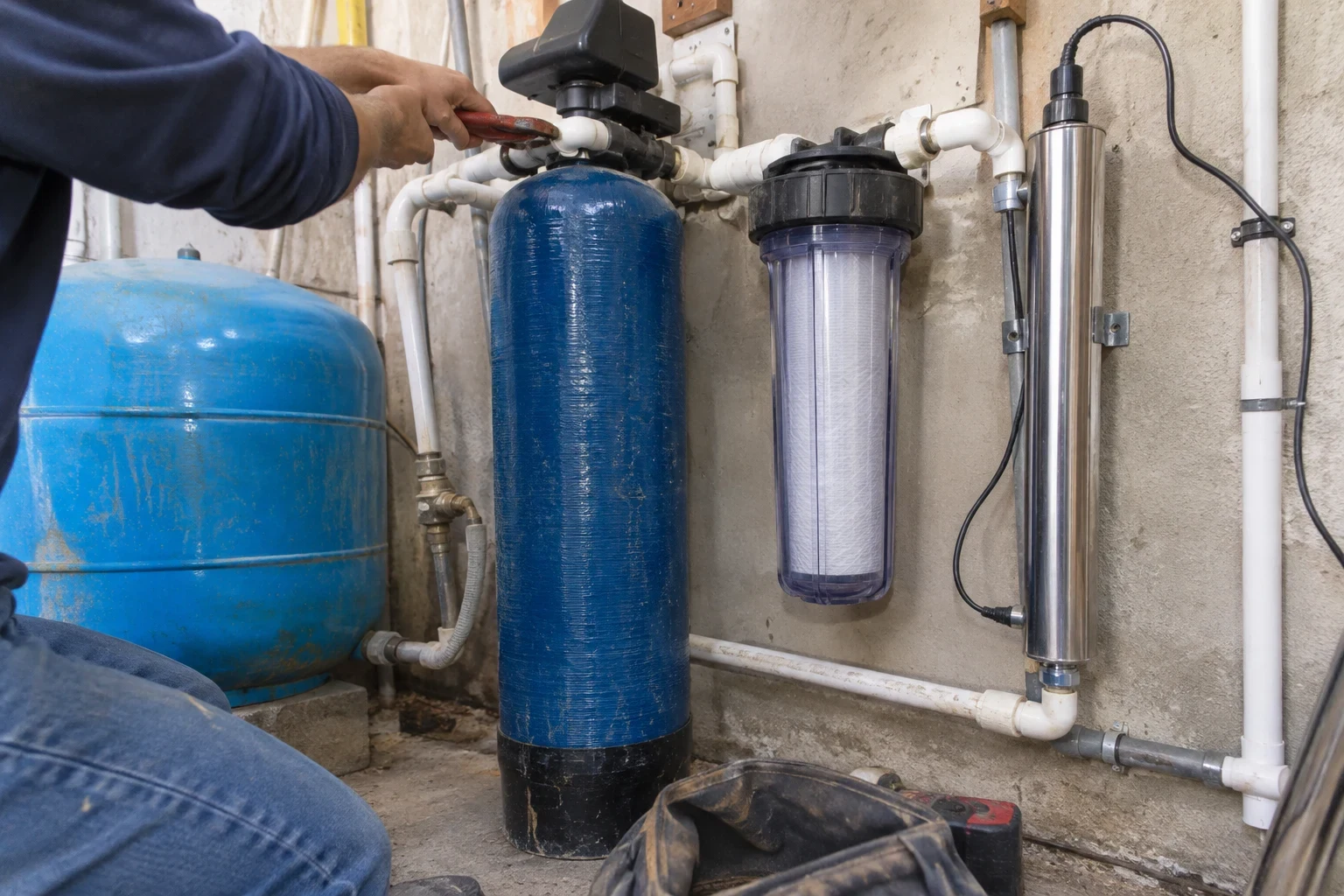
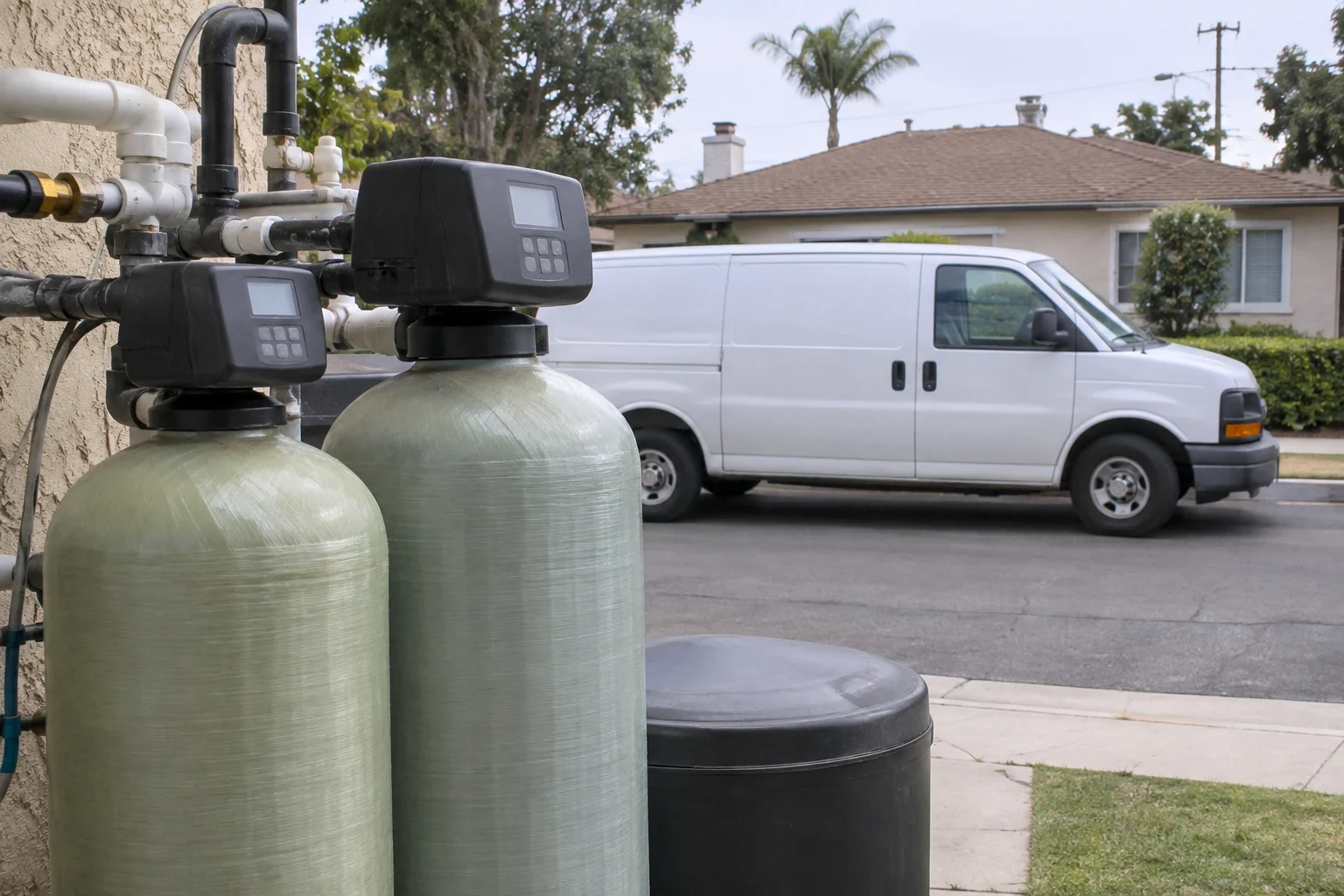
Most well systems we install pair a sediment stage with one or more tanks of media sized to your home's flow rate. We walk you through each material in plain terms: what it removes, how it is cleaned or replaced, and the trade-offs. If you are in the rural stretches around Santa Rosa Valley or up toward Ojai, the same conversation applies to your setup.
If your home is on city water instead, our City Water Filtration page covers that work.
What the work includes
- Sediment pre-filtration
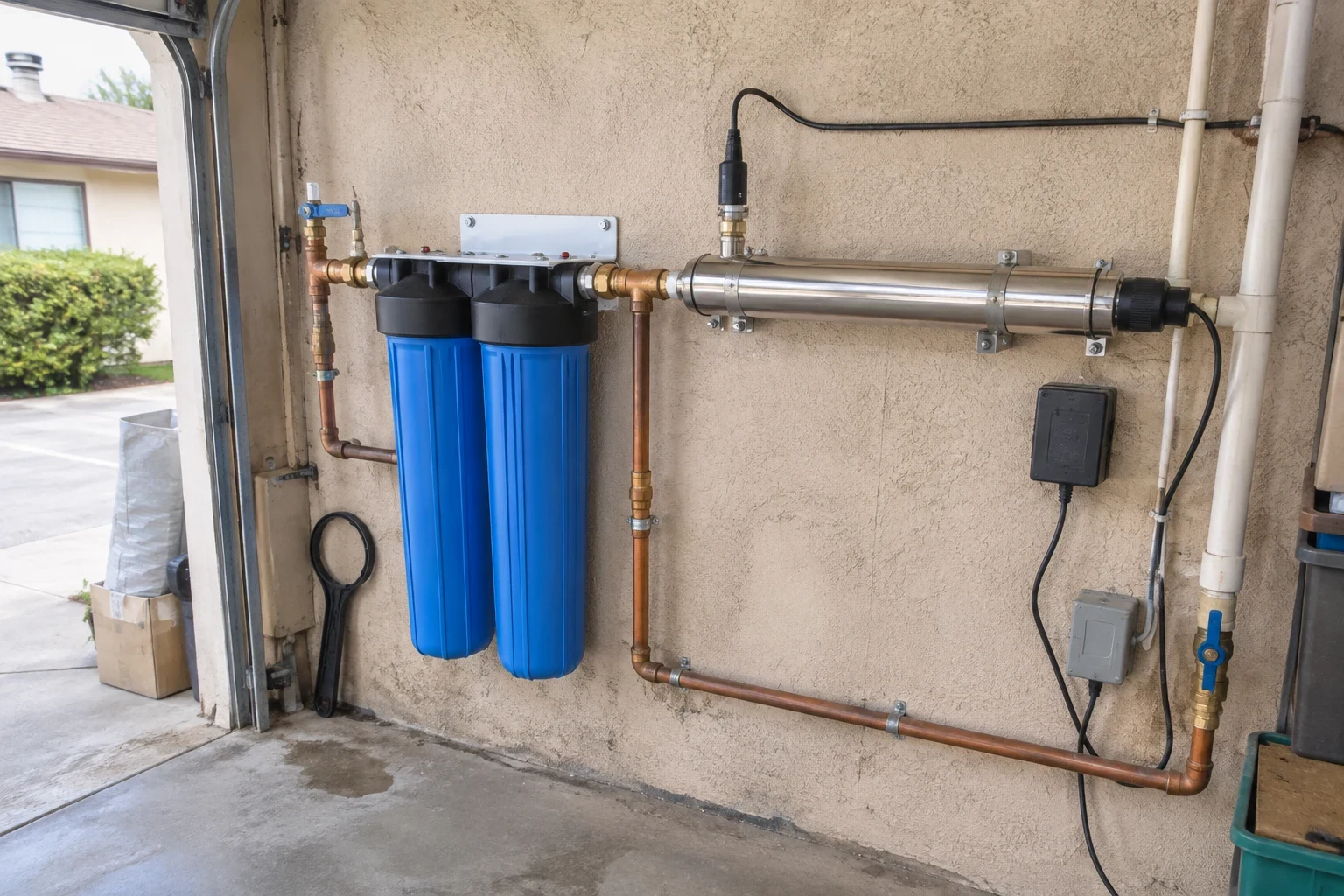
- A spin-down screen or a pleated or spun polypropylene cartridge catches sand and grit first. Pleated cartridges can be rinsed and reused. Spun cartridges trap finer particles but get replaced. Either one protects the media downstream from clogging early.
- Media chosen for iron and manganese
- Iron and manganese are what leave orange and black stains. Oxidizing media such as birm or manganese greensand turns them into particles the tank can hold and backwash away. We explain which one suits your water and what each needs to keep working.
- Catalytic carbon for odor and taste
- Catalytic carbon is better than standard carbon at handling the rotten-egg smell of hydrogen sulfide. It also takes the edge off earthy or musty tastes. It is a good fit when the smell is the main complaint.
- Proper placement on your plumbing
- The system goes in after your pressure tank so it sees steady pressure. We add bypass valves so you can keep water flowing during service, and we plumb the backwash line to a suitable drain.
- Free install
- We offer free install (we cover the cost) on the systems we put in. That way you can weigh the equipment on its own merits.
Signs your well water needs filtering
Grit in faucets and toilet tanks
Sand or silt collecting in aerators and tank bottoms means sediment is getting through. Over time it wears valves and fixture cartridges.
Orange or rust-colored stains
Reddish stains on sinks, tubs and laundry usually point to dissolved iron. They come back no matter how often you scrub.
Black or dark brown spotting
Dark specks or gray-black stains often mean manganese. It can also give coffee and tea a bitter edge.
A rotten-egg smell
A sulfur odor, often strongest from the hot tap, is a common sign of hydrogen sulfide. It is one of the most frequent reasons well owners call us.
Cloudy or off-tasting water
Haze, a metallic taste or an earthy flavor are worth a conversation. They are usually fixable once we know the source.
How a well filtration job runs
- 1
A phone conversation first
We ask what shows up at your taps, where the well equipment sits and roughly how much water your family goes through in a day. Lab results on your well are useful too, so keep any recent report close by. The more we know, the closer we can match the media.
- 2
A look at your setup
We check the pressure tank, the available space, the nearest drain and the existing plumbing. Then we lay out the media options and explain why we would pick one over another.
- 3
Installation day
We shut off the water briefly, mount the sediment stage and tanks after the pressure tank, and add bypass valves. Most of the work stays near your well equipment or garage, and we clean up when we finish.
- 4
Startup and a walkthrough
We flush the new media, set the backwash schedule and check for leaks. Before we leave, we show you how to change the sediment cartridge and what the control head is doing.
What moves the price
Two well systems can look alike and still cost different amounts, because the water drives the design. On the call we break the price into its parts and explain each one, so nothing on the final bill comes as a surprise. Installation is covered under our free install offer.
- What is in the water
- Sediment alone calls for a simpler setup than iron, manganese and sulfur together. Each added problem can mean another stage or a different media.
- How much water your home uses at once
- A busy house with several bathrooms needs bigger tanks, so the shower keeps its pressure while the dishwasher and washing machine run. A smaller home can get by with a more compact system.
- Media type
- Catalytic carbon, birm and greensand differ in cost, lifespan and upkeep. Some need occasional regeneration and some only need backwashing.
- Space and drain access
- A tight equipment area, or a long run to a suitable drain for backwash water, adds parts and time.
Well water filtration questions
Something not covered here? (805) 628-4693
Will a filter make my well water safe to drink?
Filtration handles sediment, iron, manganese, odor and taste. It does not disinfect water. If bacteria are a concern, address that separately with the right professional. If you want one more fine stage just for the glass at the kitchen faucet and the pot on the stove, an under-counter reverse osmosis unit can sit after your well system, and our Reverse Osmosis page explains how it works.
Do I need a lab report before you install anything?
For a sediment filter, what you see at the tap is often enough to go on. For iron, manganese or sulfur, recent results from a water lab help us choose the media and size it correctly. If you have a report, keep it handy and read us the numbers on the call.
How often does the system need maintenance?
Sediment cartridges are usually swapped every few months, depending on how much grit your well carries. Media tanks backwash automatically on a schedule we set. The media itself lasts for years before it needs replacing, depending on the type and your water.
Is installation really free?
Yes. We offer free install (we cover the cost) on the systems we put in. You pay for the equipment, and we explain each part of the price before we start.
How is this different from the dual tank system?
A well filtration setup is designed around problems specific to wells, like sand, iron and sulfur. Our Dual Tank Water Filtration page describes a two-tank layout that can be part of a well system when your water calls for it. We will tell you on the call which approach fits.
Find out which media fits your well
Tell us what is showing up at your taps. We will explain the material options, the upkeep each one needs and how the free install works for your home.