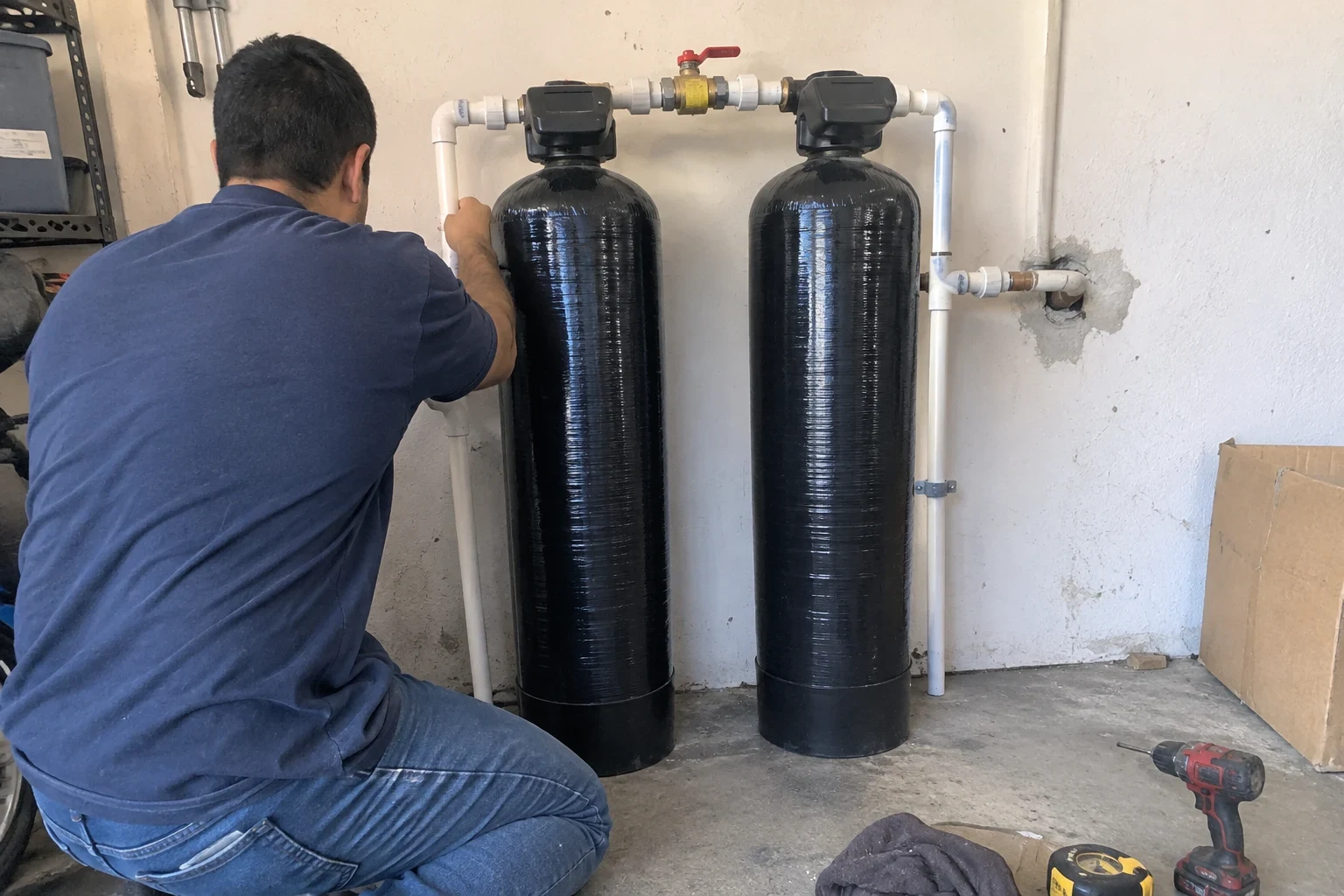
ServicesDual Tank Filtration
Dual Tank Water Filtration in Oxnard
A dual tank system treats every tap in your home in two stages. The first tank takes out chlorine taste and smell. The second handles the minerals that leave crust on faucets and film on glasses. We explain each media choice so you pick the right pair.
Two tanks, two jobs, one cleaner water line
A single filter tank has to compromise. Carbon is excellent at grabbing chlorine and the flat, pool-like smell it leaves behind, but it does little about hardness. Mineral media works on scale but does nothing for taste. Splitting the work between two tanks lets each media do what it does best, and both last longer because neither is overloaded.
Most of our conversations on the phone are about materials: which carbon, which second-stage media, what the tanks are made of and what kind of valve runs them. Those choices decide how the water tastes, how much upkeep you take on and how long the system holds up. We lay out the trade-offs in plain terms and let you decide.
Installation is free, and we cover that cost. If your system uses a salt-based second tank, we also fill it with free salt on install day, so it is working the moment we leave.
What goes into your system
Carbon first-stage tank
We usually start with coconut shell carbon, which has fine pores that trap chlorine and organic taste compounds well. If your water carries chloramine, catalytic carbon is the better pick because ordinary carbon handles it slowly.
Second-stage mineral tank
This tank targets the minerals behind white spots and crusty showerheads. You can choose a salt-based resin bed with a small brine tank, or a salt-free scale-control media that changes how minerals behave without adding salt. We walk through what each feels like day to day.
Tank shells built for the job
Our tanks use a polyethylene liner wrapped in fiberglass. They do not rust, they handle household pressure swings and they are light enough to set in a garage or side yard without a pad.
Control valve
A metered valve backwashes based on how much water you actually use, which saves water and salt. A simpler timer valve costs less up front but cleans on a schedule whether you need it or not.
Bypass and connections
Each install comes with a bypass handle. One turn routes water around the tanks and straight to your taps, which is handy during media changes or service. We connect with fittings matched to the pipe already in your home, from copper and PEX to older galvanized.
Signs a two-stage system makes sense
You taste or smell chlorine
If tap water smells faintly of a swimming pool, the carbon stage is built for exactly that.
White crust on fixtures
Spotty shower glass, chalky faucet aerators and cloudy dishes point to minerals that a carbon tank alone will not touch.
You keep buying bottled water
Pitchers and cases add up, and they only cover drinking water. A dual tank system improves the water for cooking, bathing and laundry too.
A single tank is not keeping up
If you already have one filter and still notice taste or scale issues, the media may be doing two jobs poorly. Adding a dedicated second stage often fixes it.
What install day looks like
- 1
We start with a short call
On the phone, let us know what you dislike about your tap water, such as a pool-like smell, spotty glasses or a dull taste, and how many people live with you. We then suggest a media pairing and tank size and tell you why it suits your home.
- 2
Locating the main line
Many Oxnard homes have the main line entering by the garage or on an outside wall. We pick a spot that is easy to get to for later media changes and close to a drain for backwash.
- 3
Plumbing in both tanks
After shutting off the water, we install the bypass and connect the two tanks one after the other. We run a drain line and, on salt systems, set the brine tank in place and fill it.
- 4
Flush and inspect
New carbon releases fine dust, so we flush each tank until the water runs clear. Next we check each joint for leaks and set up the valve.
- 5
A quick tour and cleanup
Before leaving, we point out the bypass handle and valve display and explain the routine upkeep. We clean up the work area and haul away the packaging.
What moves the price
Because installation is free, most of your cost is the equipment itself. The final number depends on the media and hardware you choose, and we explain each line on the phone before you commit to anything.
- Tank size
- Larger homes with more bathrooms need bigger tanks to keep flow and pressure steady when several taps run at once.
- Media type
- Catalytic carbon costs more than standard coconut shell carbon. Salt-based and salt-free second stages also differ in price and in ongoing supplies.
- Valve choice
- Metered valves cost more up front than timer valves but tend to use less water and salt over the years.
- Plumbing condition
- Older galvanized pipe or a hard-to-reach main line can call for extra fittings or a longer run.
Questions about dual tank filtration
Something not covered here? (805) 628-4693
How is this different from your whole home water filtration?
Our whole home water filtration page covers single-stage setups aimed mainly at one concern. A dual tank system adds a second dedicated stage, so it handles both taste and mineral scale. If only one of those bothers you, a simpler system may be enough, and we will say so.
How much space do the tanks need?
Each tank takes up about as much floor as a small trash can. A salt-based setup adds a brine tank beside them. Most garages or side yards have room, and we confirm placement before we start.
Will it lower my water pressure?
A system sized for your household should not cause a noticeable change at the tap. When flow does sag, the usual cause is a tank picked too small for how much water the house draws at once. That is why we ask how many bathrooms you have and how many people live there before we recommend anything.
What upkeep should I expect?
Carbon media gets replaced every few years depending on use. Salt-based systems need the brine tank topped up periodically, while salt-free media needs no salt at all. The valve handles backwashing on its own.
Can I add reverse osmosis later?
Yes. Many people pair a dual tank system with under-sink reverse osmosis for drinking water, and the pretreated water helps the reverse osmosis filters last longer.
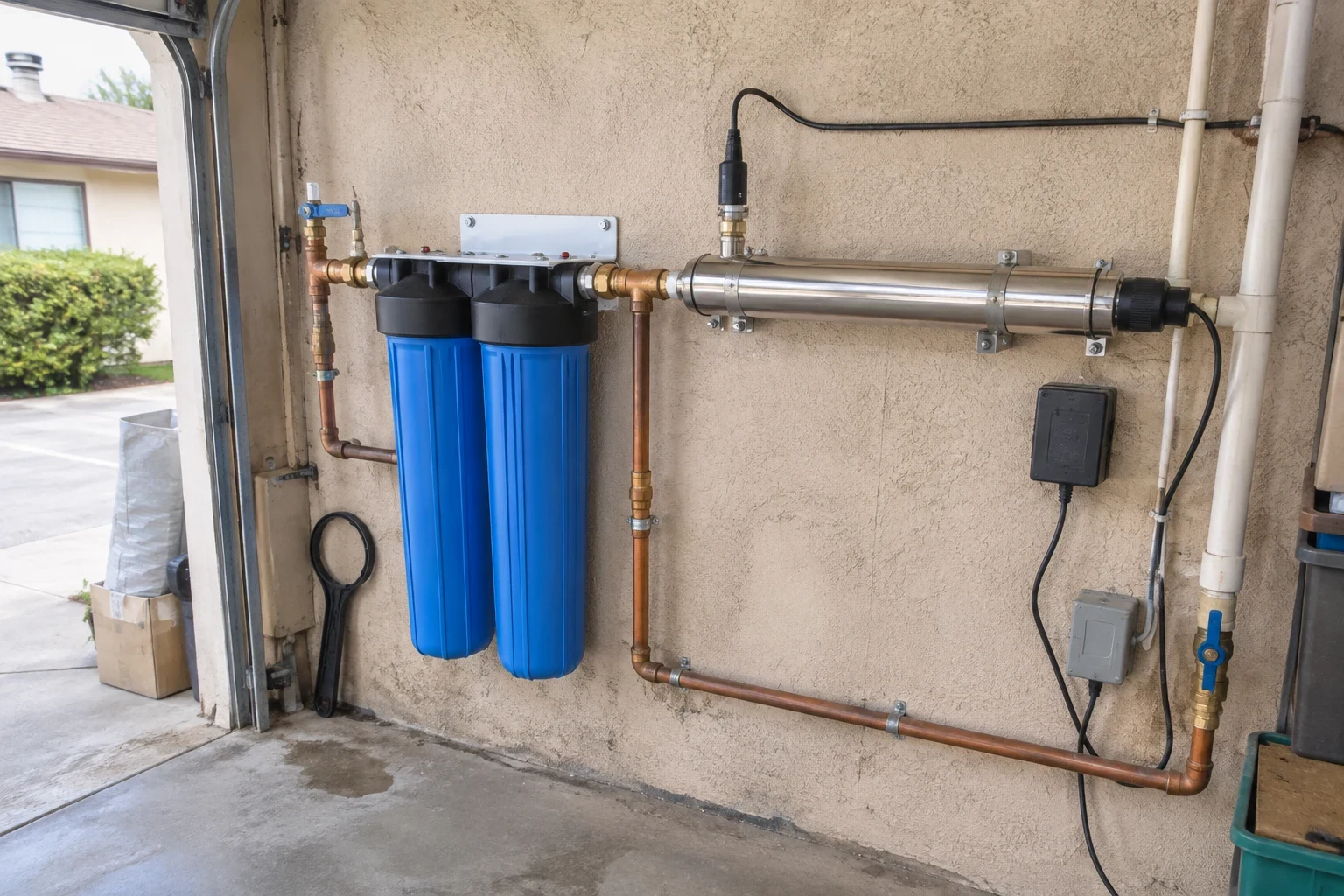
Let's pick the right pair of tanks
Tell us what you notice in your water, and we will explain which carbon and second-stage media fit your home. Installation is on us.