ServicesWhole Home Water Filtration
Whole Home Water Filtration in Oxnard
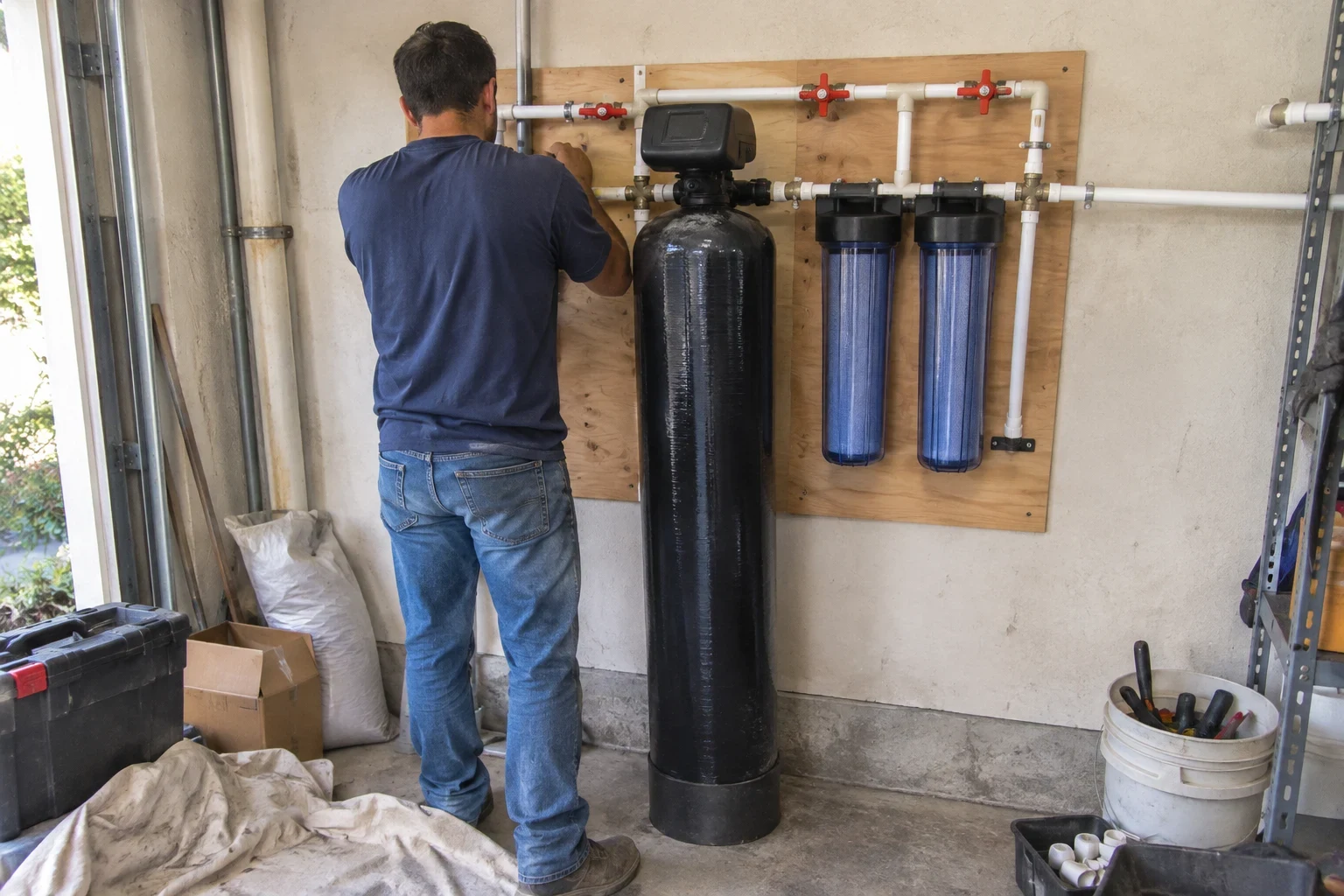
One system on your main line treats the water before it reaches any faucet, so showers, laundry, the kitchen and each bathroom sink all run cleaner and taste better. We explain what goes inside the tank and help you choose media that suits your water and your family.
Better water from the shower to the laundry room
The setup is simple: a tall media tank on your main water line, usually with a small sediment filter just upstream. Every gallon your home uses goes through it on the way in. You get showers without the chlorine smell, cleaner rinse water for laundry and better-tasting water from any faucet in the house.
The media inside the tank is what decides how well it works. Most of the time the choice is between two kinds of carbon. Standard granular activated carbon does a good job on chlorine taste and odor. Catalytic carbon is better at breaking down chloramine, a disinfectant many Southern California utilities have switched to. We lay out the pros and cons plainly before any work starts.
Some people care most about what ends up in a glass or a pot of pasta. For that, a reverse osmosis unit tucked under the kitchen sink can be the better match, and plenty of homeowners around Oxnard pair it with a whole home system.
What comes with your system
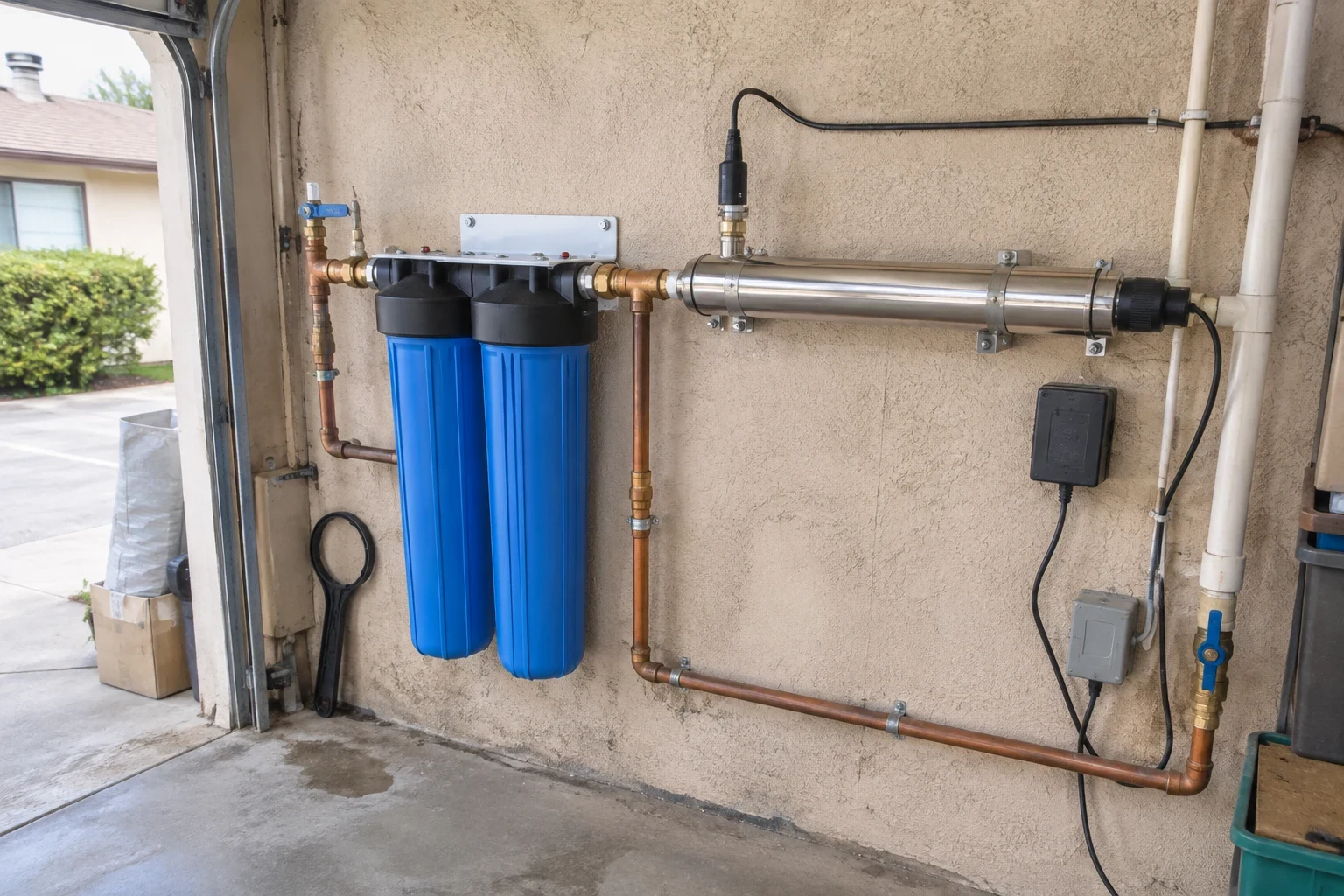
- Sediment pre-filter
- A cartridge sits in front of the main tank and traps grit, sand and loose rust. Keeping that debris off the carbon helps the media last and keeps water moving through it.
- Carbon chosen for your supply
- You decide between standard granular activated carbon and catalytic carbon, and we explain the difference first. Standard carbon is the lower-cost option and handles chlorine well. Catalytic carbon is the better pick if chloramine is present.
- Tank sized for real use
- We size the tank by your bathroom count and how much water your household pulls at the same time. Too small a tank can leave you with weak pressure when two showers run, so we plan for your busiest morning.
- Bypass valve
- With a turn of the bypass, water can route around the filter for servicing or garden watering, and your home never loses its supply.
- Tidy tie-in to your pipes
- Our fittings match the pipe you already have, from copper and PEX to older galvanized lines. Before we pack up, we test every joint for leaks.
When whole home filtration is worth it
Your shower smells like a swimming pool
That sharp chemical smell in a hot, steamy bathroom is something we hear about constantly. Pitchers and faucet filters can do nothing about the shower.
One filtered tap is not enough
Maybe you use a fridge filter or a pitcher and still taste the difference at the bathroom sink. Treating water at the main line takes care of every faucet together.
Clogged aerators and showerheads
Tiny particles building up in faucet screens or appliance inlets suggest sediment in your line. A pre-filter stops it before it travels through your plumbing.
Skin and hair feel dry after a shower
With less chlorine in the bathwater, many customers tell us that tight, dry feeling eases up. We see it as a comfort upgrade rather than a health treatment, but it is one you notice.
What to expect from start to finish
- 1
We start with a call
You tell us about your water, how many people live with you and what bugs you most about it. We recommend a media type and tank size and explain the reasoning.
- 2
Choosing the location
We find where your main line comes in, which is often in the garage or on an exterior wall. The tank needs level ground, space to service it and, for a backwashing model, a drain within reach.
- 3
The install itself
We turn off the main, add the bypass valve and connect the system to your line. Your water will be off for a portion of the day, and we let you know the rough window ahead of time.
- 4
Flush, check and tidy
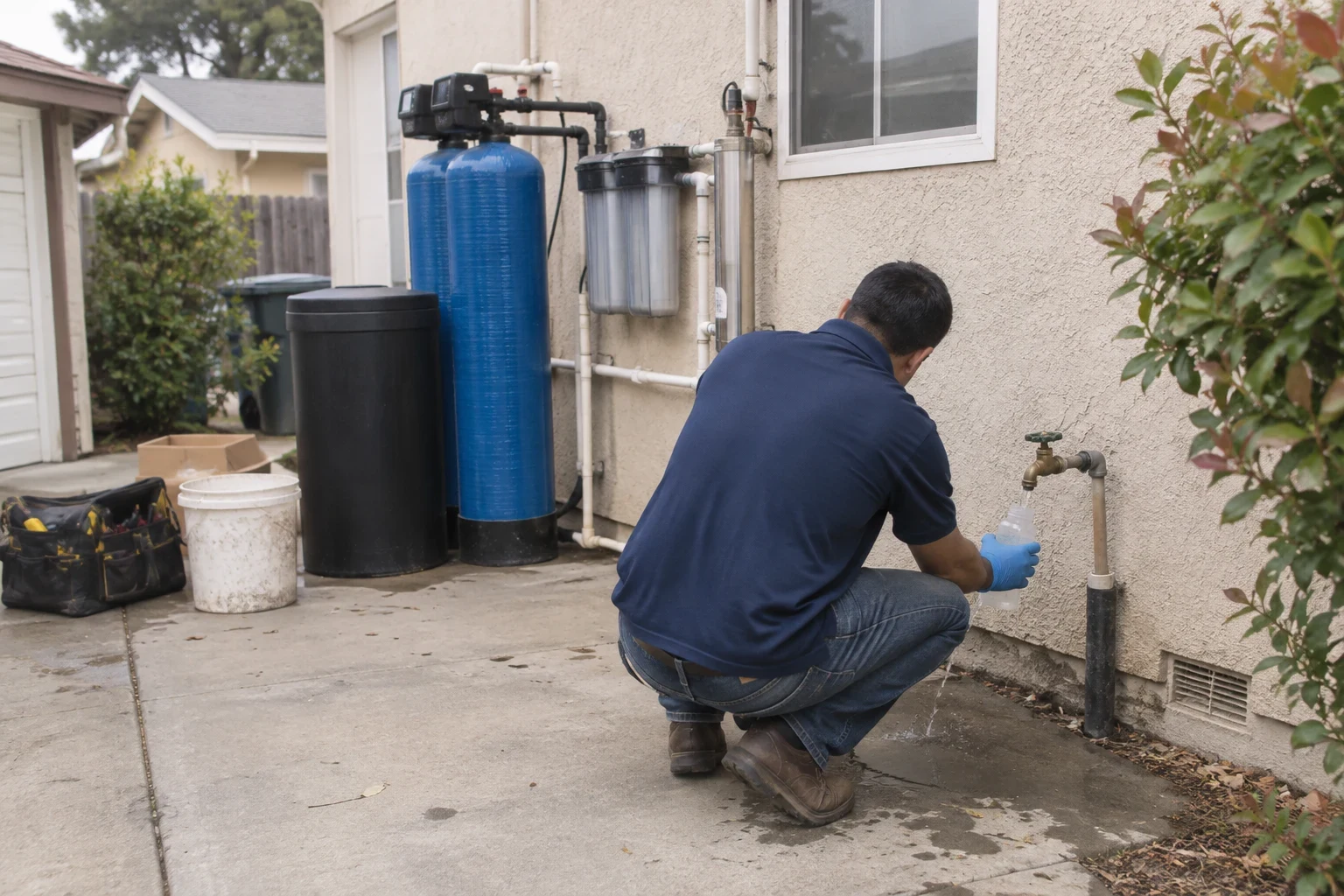
New carbon sheds fine dust, so we flush the tank until the water runs free of it, then pressure-check each connection. Once the work area is clean, we show you how the bypass works and how to change the pre-filter.
What moves the price of your system
Installation is free, since we cover the cost. The part that varies is the equipment that goes into your home. We go over each choice with you on the phone, so you understand the quote before you say yes to anything.
- Which carbon goes in the tank
- Catalytic carbon is priced higher than standard granular carbon. It earns that cost when chloramine is in your supply, and there is no reason to pay for it when it is not.
- How big the tank needs to be
- A house with three or four bathrooms draws more water at once than a two-bath home. A larger tank holds pressure steady during those busy stretches and gives the water more time in contact with the carbon.
- Self-cleaning or drain-free design
- A backwashing tank rinses its own media bed but needs a drain close by. An upflow tank skips the drain, though its media is usually swapped out instead of refreshed.
- Added stages
- A finer pre-filter cartridge, or a Reverse Osmosis unit under the kitchen sink alongside the main system, raises the total.
Questions about whole home filtration
Something not covered here? (805) 628-4693
Does a whole home filter prevent scale on faucets and glass?
Not on its own. Carbon works on taste, odor and disinfectant, and it lets the minerals that cause scale pass through. If white spots and crusty buildup are your biggest complaint, ask us about dual tank water filtration.
Let's pick the right media for your home
Tell us what you notice in your water and how many people live with you. We will explain the options and give you a clear quote.