How Often Should You Change RO Filters in Your Oxnard Home?
Each stage of a reverse osmosis system is made from a different material, and each one wears out on its own clock.
How often should you change RO filters?
Change the sediment and carbon prefilters about every 6 to 12 months, the post-carbon filter about once a year, and the RO membrane every 2 to 3 years. Your water, your household's use and the filter materials can shorten or stretch those times, so watch for slower flow or a change in taste. Questions? (805) 628-4693
Why each RO stage has its own schedule
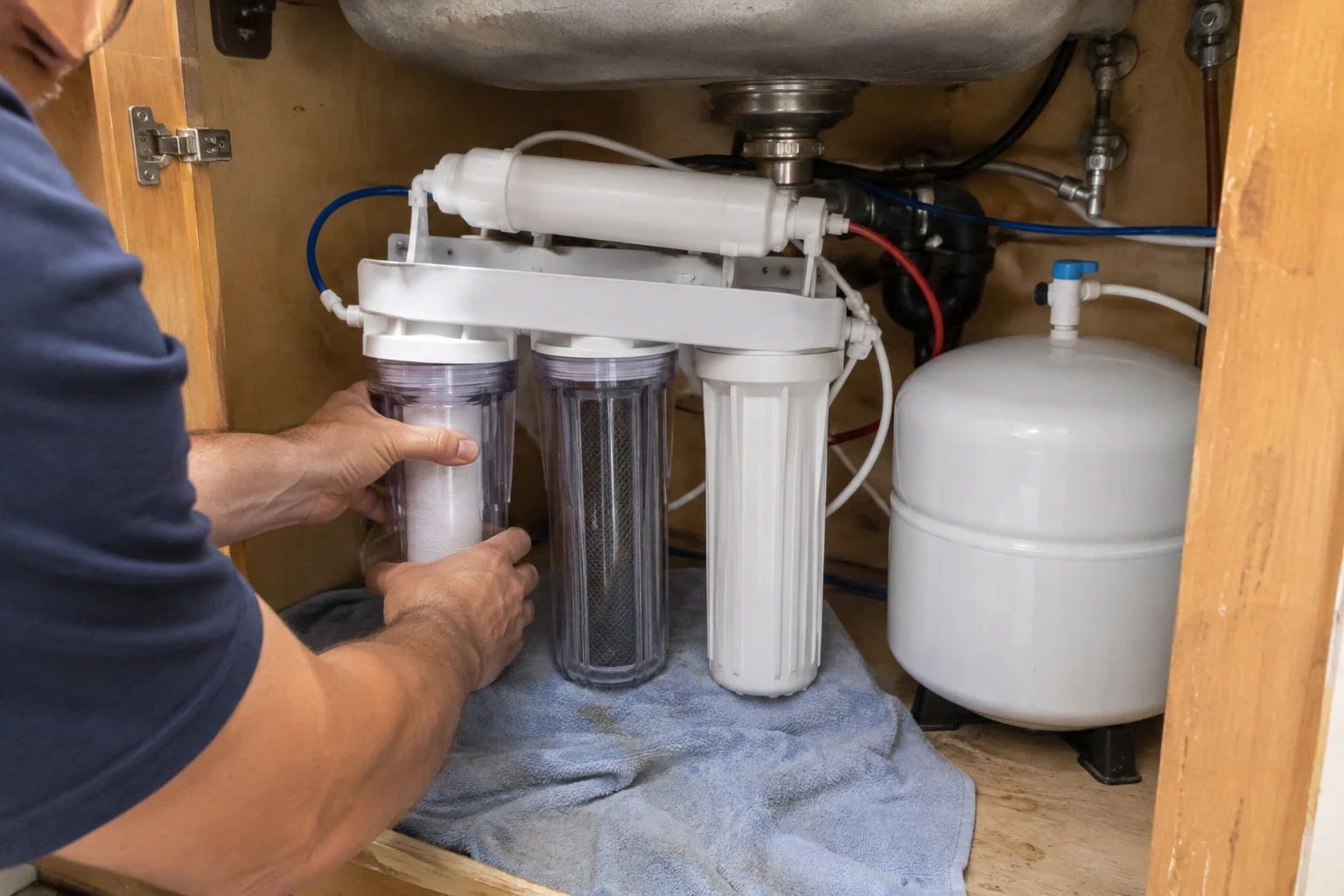
A typical under-sink reverse osmosis system isn't one filter. It's a short line of different materials, each with a single job. The prefilters protect the membrane, the membrane does the fine work, and the post filter polishes the taste on the way to your faucet.
Because the materials differ, they wear out differently. Polypropylene catches grit until it clogs. Carbon traps chlorine until its surface is used up. The membrane slowly scales over with minerals. One date on the calendar can't cover all three, which is why a stage-by-stage schedule makes more sense.
- Sediment prefilter (spun or melt-blown polypropylene): every 6 to 12 months
- Carbon prefilter (carbon block or granular carbon): every 6 to 12 months
- RO membrane (thin-film composite): every 2 to 3 years
- Post-carbon filter (usually coconut shell carbon): about every 12 months
- Remineralization stage, if you have one: about every 6 to 12 months
Sediment and carbon prefilters: the stages that protect everything else
The sediment filter is the first line of defense. It's usually polypropylene, either spun into layers or melt-blown into a dense tube, and it catches sand, rust flakes and other particles. When it fills up, water pressure drops for every stage after it. A clogged sediment filter is often the reason an RO faucet slows to a trickle.
The carbon prefilter is the one we care about most, because the membrane depends on it. City water carries chlorine or chloramine as a disinfectant, which is good for safety but hard on thin-film membranes. Carbon absorbs it before it reaches the membrane. Once the carbon is spent, chlorine passes through and starts breaking down the membrane, and that damage can't be undone.
Carbon block filters pack the carbon tightly, so they tend to remove more and resist channeling, where water finds an easy path through the media. Granular carbon flows more freely but can let water slip by as it ages. Either way, replacing the carbon prefilter on time is cheap protection for the most expensive part of the system.
The RO membrane: what wears it out and how long it lasts
Most residential membranes are thin-film composite, a very fine layer that lets water through and holds back dissolved minerals, salts and many trace contaminants. With good prefilters in front of it, a membrane commonly lasts 2 to 3 years.
Hard, mineral-heavy water shortens that. Calcium and magnesium build up on the membrane surface as scale, and the system makes water more slowly. If you notice white spots on your shower glass or crusty buildup on faucets around Oxnard, expect your membrane to sit closer to the shorter end of that range. Heavy daily use pushes it the same way.
- Purified water comes out noticeably slower than it used to
- The storage tank takes much longer to refill
- Water starts to taste flat, salty or slightly off
- The system runs to drain more than usual
The post-carbon and remineralization stages
After the membrane, water sits in a small storage tank. The post-carbon filter, usually made from coconut shell carbon, catches any taste or odor the water picks up in that tank. It's a small part, but when it's overdue you'll often taste it first, a plastic or stale note in the glass.
Some systems add a remineralization cartridge that puts a little calcium and magnesium back into the water for taste. The mineral media slowly dissolves as it works, so it gets used up. Replace it roughly every 6 to 12 months, or sooner if the water starts tasting flat again.
What can shorten or stretch your filter schedule
The ranges above are a starting point. Your own home sets the real pace. A family of five filling water bottles and cooking pasta with RO water will go through filters faster than a couple who only drink a few glasses a day.
Plumbing matters too. Older galvanized pipes can shed rust and scale that load up the sediment filter quickly. Water that sits in a system for weeks, like in a vacation home, can also grow stale in the cartridges, so change them before you rely on the water again after a long break.
A simple habit helps: write the install date on each housing with a marker, and keep a note on your phone. When we set up a new system, we walk you through which stage is which so you aren't guessing later.
- More people and more daily use: change sooner
- Harder, mineral-heavy water: shorter membrane life
- Older pipes shedding rust or scale: shorter sediment filter life
- Long periods without use: replace cartridges before drinking again
More questions about RO filter changes
Something not covered here? (805) 628-4693
Can I change RO filters myself?
Usually, yes. Most prefilters and post filters twist out of their housings once you shut off the water and relieve the pressure. The membrane takes a little more care, and if you'd rather not handle it, give us a call.
What happens if I skip a filter change?
The water keeps flowing, but the system slowly does less. Skipping the carbon prefilter is the costly one, since chlorine can damage the membrane and force an early replacement.
Should I change all the filters at once?
Many people change the prefilters and post filter together once a year to keep things simple, and replace the membrane on its own longer schedule. That way nothing gets missed.
Do I need to flush the system after a filter change?
Yes. New carbon filters release fine dust, so let the system fill and drain the first full tank or two before drinking. It's a normal step and the water clears quickly.
Not sure which filter is due?
Tell us what system you have and how your water has been tasting. We'll talk through which stages need changing, what materials suit your home, and whether a new reverse osmosis setup makes sense. On new systems, we offer free install (we cover the cost).