ServicesCity Water Filtration
City Water Filtration in Oxnard
City tap water meets safety rules, yet the chlorine or chloramine added to protect it on the way to you is often what you taste and smell. We install city water filtration on your main line, with carbon media picked for the disinfectant your supply actually uses.
What a city water filter does for your home
Municipal water shows up already treated. The utility adds chlorine or chloramine to keep it clean during its long run through the mains. That protects your health, and it is also the flavor in a glass of tap water, the smell in a hot shower and part of why skin and hair can feel dry.
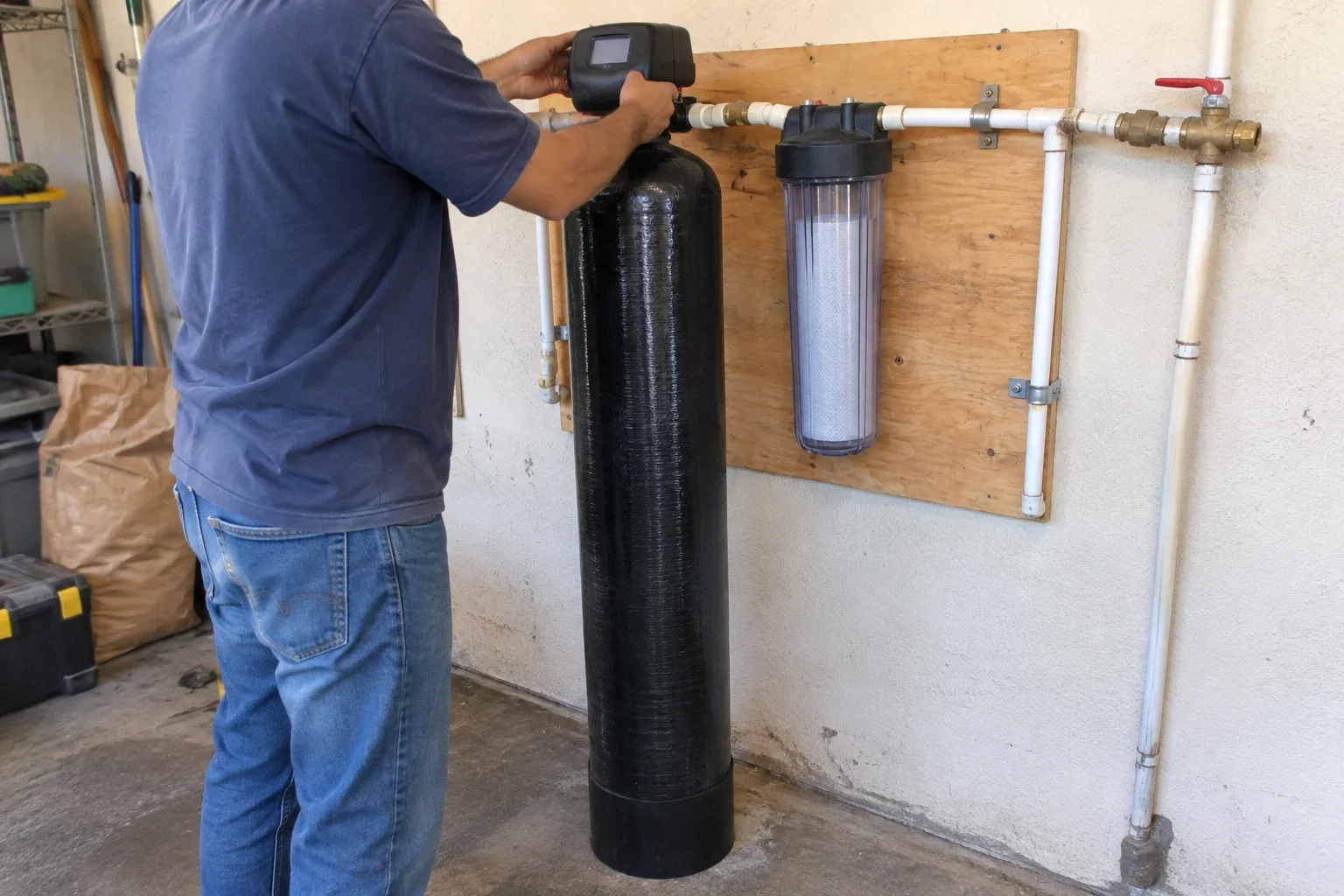
A city water filter is made for exactly that. First a sediment stage strains out grit, then the water moves through carbon media that captures the disinfectant along with many compounds that affect taste and smell. Because it sits on the main line, every tap in your home gets filtered water, from the shower and washing machine to the fridge ice maker.
What is inside the tank matters more than the label on it. Standard activated carbon takes care of chlorine well. Chloramine is harder to remove and needs catalytic carbon, which costs more but does the job. We go over which one suits your water before installation, so you neither overpay for media you do not need nor end up with one that falls behind.
What's included in a city water system
Sediment prefilter
A first stage catches sand, rust flakes and grit from the mains. It protects the carbon from clogging and helps the main tank last longer.
The right carbon media
We choose between granular activated carbon and catalytic carbon based on whether your utility uses chlorine or chloramine. Some systems add a KDF layer, a copper-zinc media that works alongside carbon on chlorine and helps keep the bed from fouling.
Tank or cartridge housing
Tank systems hold far more media, so they run longer between changes and keep good water pressure for a busy household. Cartridge housings are smaller and cheaper up front but need more frequent swaps. We walk you through both.
Bypass valve and fittings
A bypass lets you shut the filter out of the loop without turning off water to your home. We use fittings suited to your existing pipe, whether copper, PEX or older galvanized steel.
Free install
Free install (we cover the cost). The system goes in, gets flushed and is tested for leaks before we leave.
A plain walkthrough
Before we go, we show you where the bypass is, how to change the prefilter and what the media replacement schedule looks like for your household size.
Signs your city water needs a filter
It tastes or smells like a pool
That sharp, chemical note is the disinfectant. Carbon removes it, and the difference in a glass of water is usually obvious on day one.
Showers leave skin and hair dry
Hot water releases chlorine into the steam. Filtering at the main line treats the shower too, which a pitcher or faucet filter cannot do.
You buy a lot of bottled water
If the family avoids the tap because of the taste, a whole-house carbon system makes every faucet usable again.
Coffee and ice taste off
Disinfectant flavor carries into coffee, tea and ice cubes. Filtered water lets those taste like they should.
Faucet filters keep wearing out
Small cartridges clog fast and only cover one tap. A tank system holds much more media and serves the whole house.
What happens on installation day
- 1
We talk by phone first
Tell us what you dislike about your water and how many people are in the house. We look up your utility's published water report to learn which disinfectant it adds, then recommend a media type and tank size.
- 2
Picking the location
Most systems sit close to the main shutoff, usually in the garage or on an outside wall. We make sure there is space, a level surface and access for servicing the tanks later.
- 3
Connecting to the main line
Once the supply is off, we cut into the main line, install the bypass valve and plumb in the system. Your water is usually off for just part of the visit.
- 4
Flushing, leak checks and cleanup
New carbon releases fine dust, so we run water until it flows clear. We inspect every joint for drips, clean up the work area and walk you through how it all works.
What affects the price
Installation is on us, so the number you hear is mostly about the system itself and the media that fills it. Before anything is scheduled, we go over the parts one at a time on the phone, and you can ask about any line that seems unclear. Here is what tends to raise or lower the total.
- Type of carbon
- Catalytic carbon, needed for chloramine, costs more than standard activated carbon. If your supply is treated with chlorine alone, there is no reason to pay for it.
- Tank size
- Bigger tanks suit larger households and higher flow, and they run longer before the media needs replacing. A smaller home can often do well with a compact unit.
- Extra stages
- Adding a KDF layer or a larger sediment prefilter raises the price, though either one can help the main carbon bed last longer.
- Pipe material and layout
- Old galvanized pipe, or a main line squeezed into a tight spot, may call for additional fittings. You hear about that from us before the job is booked.
City water filtration questions
Something not covered here? (805) 628-4693
Does a city water filter remove everything?
No, and we will not tell you it does. Carbon does very well on chlorine, chloramine and many of the compounds behind off tastes and odors. If you want drinking and cooking water with dissolved minerals taken out, our reverse osmosis system under the sink is the right tool, and it works well alongside a city system.
How do I know if I need catalytic carbon?
That comes down to whether your utility treats with chlorine or chloramine. Utilities list it in their annual water quality report, and we go over it with you on the phone. Regular carbon is slow to break down chloramine, so catalytic media is the honest pick when that is what your water carries.
How often does the media need replacing?
The sediment prefilter is the part you swap most often, usually a few times a year, sooner if your lines send through more sand and rust. The carbon in the tank lasts far longer. How long depends on tank size, how much water your household uses and how much disinfectant is in the supply, and we give you a schedule that fits your home.
Will a filter lower my water pressure?
A tank system sized correctly should not cause a drop you would notice. Weak pressure usually traces back to undersized units or clogged cartridges. That is why we size by household and flow rather than by the lowest price tag.
Is this different from a dual tank system?
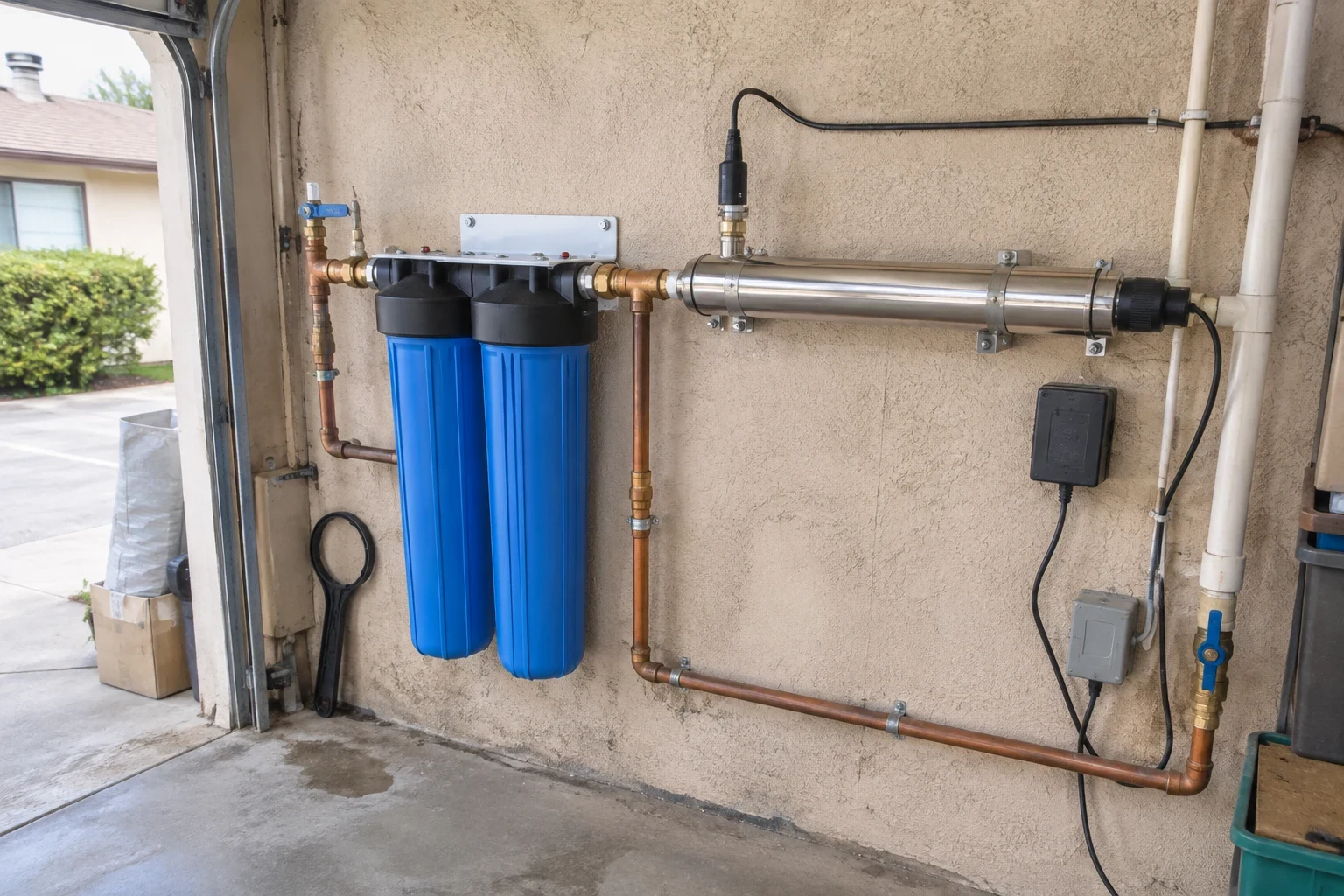
Yes. A city water system is built around carbon for treated municipal water. Our dual tank water filtration splits media across two tanks, which some homes prefer for extra capacity. We are happy to compare the two by phone and help you choose.
Ready for water that tastes clean
Tell us about your water and your home, and we will recommend the carbon media and tank size that fit. We serve Oxnard and nearby towns, including Ventura, Camarillo and Port Hueneme.